Does Vacuum Sealing Make Food Shelf-Stable? What It Does and Doesn't Do
Vacuum sealing slows spoilage; it doesn't make food shelf-stable or kill bacteria. What it's genuinely great at, and its real limits.
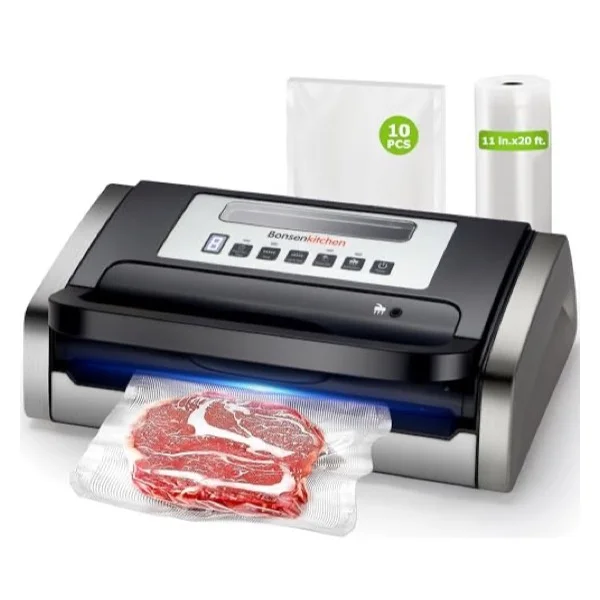
Vacuum sealing is one of the most useful tools in a kitchen, and also one of the most misunderstood. The common belief is that pulling the air out makes food "shelf-stable", safe to leave at room temperature. It doesn't, and knowing exactly what vacuum sealing does keeps you from a costly mistake.
What vacuum sealing actually does
A vacuum sealer removes most of the air around the food and heat-seals the bag. Less air means slower oxidation (the rancidity and off-flavors that oxygen drives), and no air pocket means no freezer burn. That's why vacuum-sealed food lasts longer than the same food loosely wrapped, often several times longer in the freezer.
| Vacuum sealing does | Vacuum sealing does not |
|---|---|
| Slow oxidation and staling | Kill bacteria or spores |
| Prevent freezer burn | Make perishables room-safe |
| Extend fridge/freezer life | Replace refrigeration |
| Keep dry goods fresh longer | Match mylar for decade-long storage |
What it doesn't do
Removing oxygen slows the chemical spoilage, but it does nothing to the bacteria already on the food, and some dangerous ones actually prefer a low-oxygen environment. So a vacuum-sealed steak on the counter is no safer than an unwrapped one, it still belongs in the fridge or freezer. Vacuum sealing extends time; it doesn't grant room-temperature safety.
Cold still does the heavy lifting. Vacuum sealing multiplies the shelf life of refrigerated and frozen food, but the refrigeration is what keeps it safe. The seal is a partner to the cold, not a replacement for it.
When you want mylar instead
For dry staples you want to keep for years at room temperature, vacuum sealing isn't the tool, its clear bags let light in and don't fully remove oxygen. That job belongs to mylar bags with an oxygen absorber, which drive oxygen down to a fraction of a percent behind an opaque foil barrier. Use each for what it's built for.
The bottom line
Vacuum sealing is excellent at making fresh food last longer in the cold and keeping dry goods fresher on the shelf, but it doesn't sterilize food or make it shelf-stable. Keep perishables cold, and reach for mylar and absorbers when you need decades.
Vacuum sealing slows spoilage and prevents freezer burn, but it doesn't kill bacteria or make perishable food room-safe. Keep it cold. For decade-long dry storage, mylar plus an oxygen absorber is the right tool, not a vacuum sealer.
Some links are affiliate links: if you buy through them we may earn a commission at no extra cost to you. It never changes our rankings. Full disclosure.