How to Start Fermenting Vegetables at Home
Salt, submersion, an airlock and time: the four things that make a safe, crunchy ferment. A beginner's method with the gear you need.
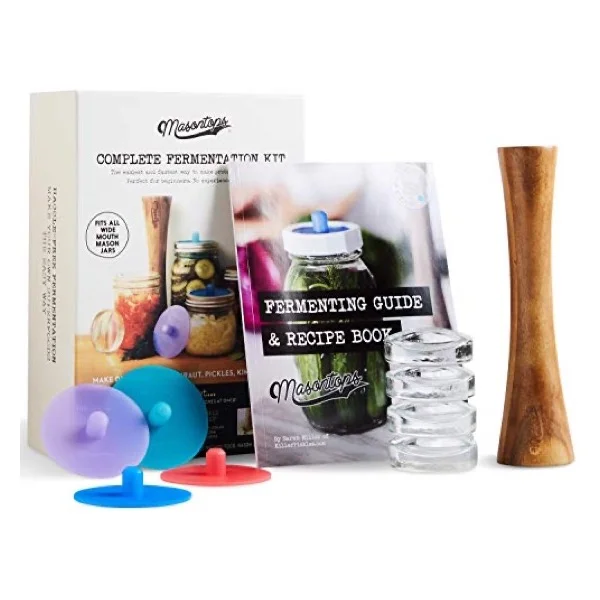
Fermenting vegetables sounds like alchemy and is really just four things done in order: salt, submersion, an airlock, and time. Salt and the lack of oxygen let the good lactic-acid bacteria outcompete everything else, souring and preserving the vegetables. Here's the beginner's method and the small kit that makes it foolproof.
What you need
You can start with jars you already own plus an airlock kit, an airlock lid and a weight per jar. When you're fermenting by the gallon, a dedicated water-seal crock takes over; our crock vs. jar kit guide covers when to make that jump.
The method
- Salt. Weigh your vegetables and any added water, and use about 2% salt by weight as a starting point, roughly one level tablespoon of fine salt per two pounds. Salt sets the pace and keeps the texture crisp.
- Pack. Shred or chop, mix or massage in the salt (for cabbage, until it releases its own brine), and pack tightly into the jar, pressing out air pockets.
- Submerge. Everything must sit under the brine, exposed vegetables are where mould grows. A glass weight holds them down.
- Airlock. Fit a one-way airlock lid so carbon-dioxide escapes without letting oxygen back in. This is what removes the daily "burping" and most beginner failures.
- Wait. Leave it at cool room temperature, out of direct sun, for one to four weeks. Taste from day five or so; when it's sour enough for you, move it to the fridge.
Submerged is safe. Lacto-fermentation is a well-understood, acidic, oxygen-free process. Keep the vegetables under the brine and use an airlock, and you've removed the two things that cause a batch to fail.
A note on safety
If you ever see fuzzy mould, or it smells putrid rather than pleasantly sour, discard it: that's the exception, not the norm, and it almost always traces back to vegetables that floated above the brine. For the deeper science and tested recipes, food-safety authorities like the National Center for Home Food Preservation are the right place to go; we cover the gear, not medical guidance.
Sources
- National Center for Home Food Preservation, fermentation: the tested basics of fermenting and brining vegetables.
- Utah State University Extension, fermentation basics: salt ratios and the role of an anaerobic environment.
Fermenting is four steps: about 2% salt, keep it submerged, fit an airlock, and wait one to four weeks. Start with a Mason jar airlock kit and jars you own; graduate to a crock only when you're fermenting by the gallon.
Some links are affiliate links: if you buy through them we may earn a commission at no extra cost to you. It never changes our rankings. Full disclosure.