How to Store Rice and Beans for 25+ Years
Supermarket rice lasts a year; sealed right it lasts decades. The three-part mylar, oxygen-absorber and bucket system, step by step.
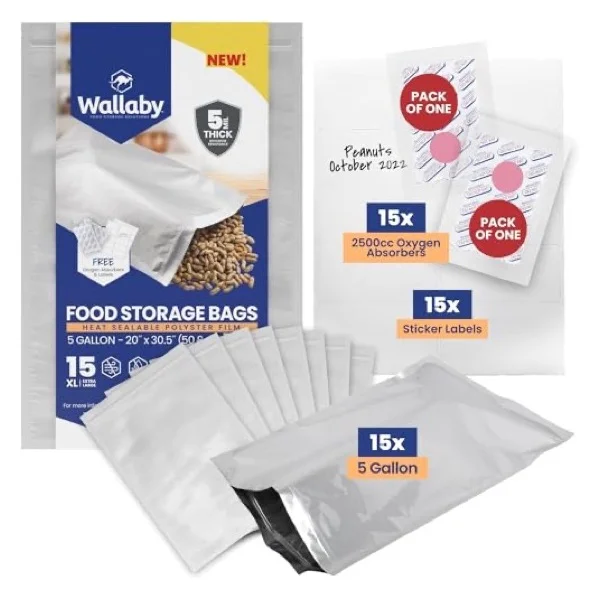
Rice and beans are the backbone of any food store: cheap, filling, and, packed correctly, good for a quarter of a century. The catch is packed correctly. The bag of rice from the supermarket shelf lasts a year or two; the same rice, sealed the right way, lasts decades. Here's the whole system, and it comes down to three inexpensive parts.
The three-part system
Long-term dry storage is really one job (keep oxygen out), done by three things working together:
- A mylar bag, a foil laminate that blocks light and is a far better oxygen barrier than plastic.
- An oxygen absorber dropped inside before you seal, it scavenges the oxygen the bag can't keep out on its own.
- A food-grade bucket, the outer shell that stops rodents and pests from ever reaching the bags.
Skip any one and you weaken the whole thing: a bag with no absorber still holds oxygen; loose bags with no bucket are a rodent target.
Step by step
- Fill the mylar bag with dry rice or beans, leaving a few inches at the top to seal. Line the bag inside the bucket first so it stands up.
- Add the oxygen absorber. Size it to the bag, see below, and work quickly once the pack is open.
- Press out the loose air and heat-seal the top with an iron or hair straightener on a firm edge, leaving a straight, even seal.
- Label and date the bag, then lower it into the bucket and fit the lid.
Do this in one session. Oxygen absorbers start working the moment they meet air. Open the pack only when your bags are filled and ready, and reseal any spares immediately in an airtight jar.
How much oxygen absorber
The working rule is 300–500cc of absorber per gallon of dry food. Rounding up is free (excess absorber does nothing harmful), so size at the top of the range.
| Bag size | Absorber to use |
|---|---|
| 1 gallon | 300–500cc |
| 5 gallon (bucket liner) | 2,000–2,500cc |
Our oxygen absorber calculator does the maths for any number of containers, and the shelf-life calculator shows what each food realistically gets.
What this won't save
The 25-to-30-year figure is for low-oil staples: white rice, dried beans, wheat, oats. Brown rice, and anything oily, is the exception: its natural oils go rancid whatever the barrier, so expect one to two years and keep it in the freezer instead. And a note that trips people up: don't add an oxygen absorber to sugar or salt, it fuses them into a solid block. Seal those dry, on their own.
Keep it cool and dark
Heat is the single biggest life-shortener. A stash at a steady 60°F lasts far longer than the same food in a 90°F garage, a hot spot can halve these numbers. A dark closet, basement or interior cupboard beats a garage or attic every time.
Three cheap parts (a mylar bag, an oxygen absorber and a food-grade bucket) turn a year of shelf life into decades. Size the absorber to the bag, seal in one session, keep it cool and dark, and reserve it for low-oil staples.
Some links are affiliate links: if you buy through them we may earn a commission at no extra cost to you. It never changes our rankings. Full disclosure.